
India
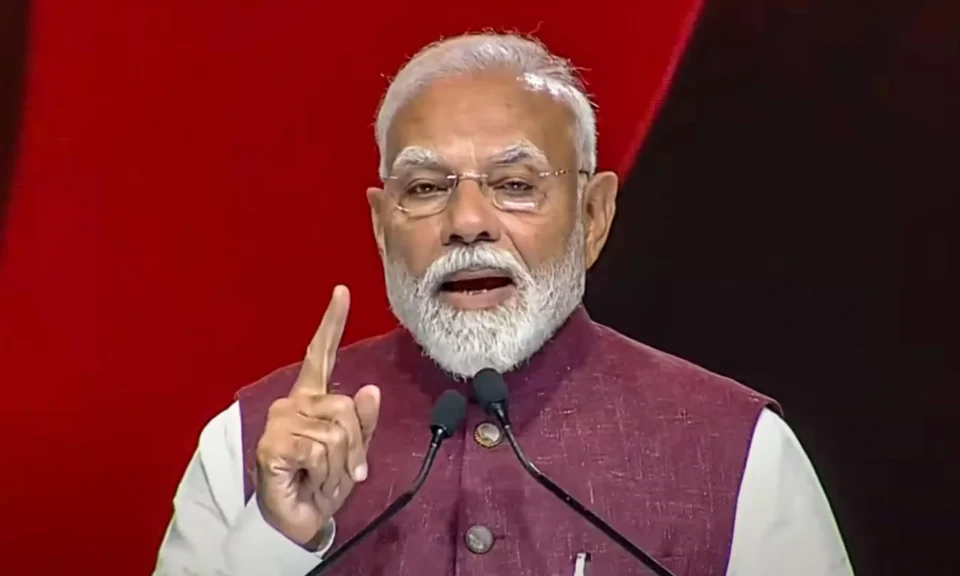
In a rapidly transforming world, technology has become more than just a tool of convenience—it is the very backbone of progress, growth, and empowerment. Prime Minister Narendra Modi has consistently emphasized that technology is India’s greatest equalizer, a force that bridges divides, breaks barriers, and creates opportunities for all citizens, regardless of geography, gender, or socio-economic status.
From the rise of Digital India to the spread of Unified Payments Interface (UPI), from AI-driven governance to the harnessing of space technology, Modi’s vision places technology at the heart of nation-building. His recent reflections on technology reaffirm its role not merely as an enabler of growth but as a democratic instrument of inclusion.
Technology as a Bridge, Not a Barrier
For centuries, inequality in India has been linked to access—access to resources, education, healthcare, and opportunities. What technology has done, under strong government policy direction, is to remove traditional barriers. Today, a villager in Jharkhand with a smartphone can access banking, healthcare consultations, online education, and even AI-powered government services—something unimaginable just a decade ago.
PM Modi has often stressed that technology does not differentiate between rich or poor. If harnessed properly, it brings everyone onto the same playing field, creating a society where merit, innovation, and effort matter more than privilege.
Digital India: The Turning Point
Launched in 2015, Digital India is the cornerstone of Modi’s vision of technology-driven equality. Its goal was straightforward: transform India into a digitally empowered society and knowledge economy.
Key achievements include:
- Aadhaar Integration: Nearly every Indian now has a biometric digital identity. This made welfare delivery transparent and curbed leakages.
- Jan Dhan Accounts: Coupled with Aadhaar and mobile connectivity, this financial inclusion initiative brought millions into the formal banking sector.
- Direct Benefit Transfer (DBT): Subsidies and welfare schemes now reach beneficiaries directly, cutting out middlemen.
- Digital Literacy Programs: Initiatives like PMGDISHA have trained rural citizens to use digital tools.
This trinity of Jan Dhan–Aadhaar–Mobile (JAM) has become the foundation for inclusive development, empowering citizens who were once excluded from formal systems.
UPI and the Digital Payments Revolution
One of the most dramatic equalizers has been India’s payments ecosystem. UPI (Unified Payments Interface) has transformed the way Indians transact.
- Small shopkeepers, vegetable vendors, and street hawkers now accept digital payments as easily as mega-retailers.
- India leads the world in real-time digital transactions, processing billions every month.
- Women, senior citizens, and even school children have found UPI simple and safe, breaking dependency on cash and middlemen.
This revolution was not just about financial convenience. It was about trust and dignity—enabling every citizen, no matter how poor, to participate in the digital economy on equal footing.
Technology in Governance: Transparent and Accountable
PM Modi has consistently argued that technology should make governments smaller, more transparent, and citizen-friendly.
Examples include:
- Digital governance platforms like MyGov, DigiLocker, and CoWIN (for vaccination) that simplify citizen interaction with the state.
- E-procurement systems that make government purchases transparent and reduce corruption.
- AI-powered grievance redressal in some ministries, ensuring faster response to citizen complaints.
- GIS and satellite mapping to monitor schemes like MNREGA, smart city projects, and crop insurance claims.
The result is a shift from red tape to real-time governance, where accountability is measurable and corruption opportunities shrink.
Education: Democratizing Knowledge
Modi’s vision extends to education, where technology has leveled access to learning resources.
- SWAYAM and DIKSHA platforms provide free online courses to millions of students.
- Virtual classrooms, e-library initiatives, and government tie-ups with edtech startups have expanded learning opportunities in rural India.
- During the pandemic, digital platforms ensured continuity of education when physical schools shut down.
As PM Modi remarked, “Technology empowers students from small towns to dream big, compete globally, and succeed.”
Healthcare: From Telemedicine to Digital Health IDs
Healthcare has long been a sector marked by inequality. Technology is changing this:
- The Ayushman Bharat Digital Mission aims to give every Indian a digital health ID, linking hospitals, doctors, and patients.
- e-Sanjeevani telemedicine services have connected millions of patients in rural India to doctors in cities.
- AI is being deployed for diagnostics, early detection of diseases, and predictive health solutions.
For a nation where healthcare access was once a privilege, digital health is becoming the equalizer of life chances.
Startups, AI, and the New India
PM Modi often highlights how technology is reshaping India’s economy and creating equal opportunities for entrepreneurs.
- India is now the third-largest startup ecosystem in the world.
- Government programs like Startup India, Digital India, and Make in India provide an enabling environment.
- AI, robotics, blockchain, and quantum computing are no longer limited to elite labs—they are part of university projects, startup accelerators, and hackathons across the country.
This democratization of innovation ensures that a young coder from a small town can build the next unicorn alongside entrepreneurs in Bengaluru or Silicon Valley.
Rural India: The Digital Leap
Critics once argued that digital technology would widen the rural-urban divide. Modi’s policies have turned this on its head.
- BharatNet has brought high-speed internet to thousands of villages.
- Farmers use apps to check weather, soil quality, and mandi prices.
- Women’s self-help groups are selling handicrafts and homemade products online.
- Digital literacy campaigns ensure even first-generation internet users can navigate the online world.
This means that rural citizens are no longer left behind—they are active participants in the national growth story.
Women and Technology: Breaking Gender Barriers
PM Modi has repeatedly stressed that empowering women with technology is not just social justice—it is smart economics.
- Women are at the forefront of digital banking and micro-enterprises.
- Access to smartphones has increased participation in education, skill development, and entrepreneurship.
- Schemes like Mudra Yojana and Digital Saksharta Abhiyan have given women financial independence.
Technology is enabling women to move from the margins to the mainstream of India’s economy.
Space and Science: National Pride and Global Recognition
Beyond daily life, India’s technological achievements in space exploration also act as a great equalizer. Missions like Chandrayaan-3 and Aditya-L1 prove that even with limited budgets, India can compete with global superpowers in space science.
These achievements inspire millions of young Indians to pursue careers in science and technology, breaking the myth that only wealthy nations can lead in innovation.
Challenges Ahead
While the progress is remarkable, PM Modi himself acknowledges that challenges remain:
- Bridging the digital divide in remote areas.
- Ensuring cybersecurity and data privacy.
- Combating misinformation and misuse of technology.
- Upgrading digital infrastructure for a rapidly growing population.
Addressing these will ensure technology continues to serve as an equalizer and not an amplifier of inequality.
Global Perspective: India as a Digital Leader
India’s success in using technology inclusively is now studied worldwide. Whether it is the CoWIN vaccination platform, UPI, or Aadhaar-linked welfare systems, many nations seek to replicate India’s models.
PM Modi has projected India not just as a beneficiary but as a global digital leader, offering scalable, affordable solutions to the developing world.
Conclusion
Prime Minister Modi’s belief in technology as India’s greatest equalizer is rooted in tangible transformations visible across the nation. From financial empowerment to healthcare, from education to governance, technology has given wings to the aspirations of ordinary Indians.
As Modi often says, “Technology is not just for the elite—it is for everyone. It is the bridge between dreams and reality.”
In this vision, India is not only embracing the digital revolution but also reshaping it into a revolution of equality, dignity, and opportunity.
