
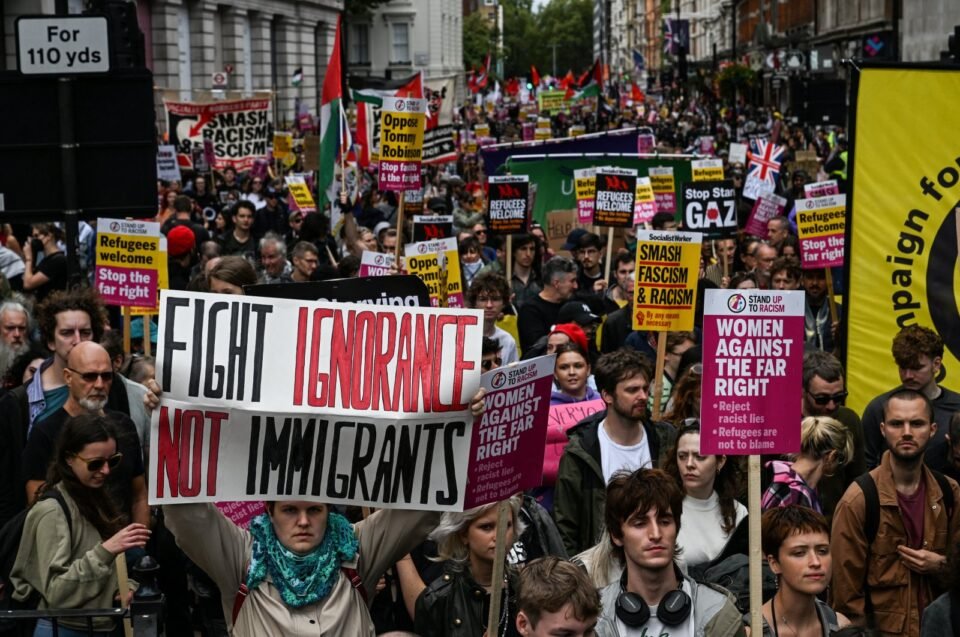
In recent weeks, global headlines have been dominated by a wave of outbreaks and the public unrest that followed. After Nepal and France witnessed widespread demonstrations, England has now become the latest flashpoint. What began as a health-related outbreak quickly snowballed into one of the largest street mobilizations in recent memory. Millions of people poured onto the streets of major English cities, chanting slogans, waving banners, and in some areas, clashing violently with police. Reports of bottles being hurled at officers and widespread chaos have raised alarms across Europe. The situation reflects a growing frustration that transcends national borders and underlines how outbreaks can quickly spiral into social and political crises.
Global Context: From Nepal to France
The current unrest in England did not occur in isolation. In Nepal, the outbreak earlier this year led to widespread dissatisfaction with how authorities handled the crisis. Protests paralyzed Kathmandu and other major cities, with students, workers, and ordinary citizens demanding accountability.
In France, a similar outbreak led to massive demonstrations across Paris, Lyon, and Marseille. French citizens expressed anger over government policies, accusing leaders of being slow to respond, while at the same time enforcing restrictions that deeply affected everyday life. Clashes between demonstrators and riot police became a regular occurrence, with international media highlighting the growing gap between the government and its citizens.
The unrest in England now follows this pattern, illustrating how fragile the balance between public trust and state response can be during times of crisis.
The Outbreak in England
The outbreak in England triggered widespread fear and uncertainty. Health authorities initially downplayed the scale, but as infections spread rapidly, hospitals began reporting overwhelming patient inflows. The shortage of medical supplies, delays in testing, and contradictory government statements added fuel to public anger.
Citizens accused the government of failing to act swiftly despite witnessing earlier crises in Nepal and France. Instead of preparing for a potential outbreak, critics say, the leadership was complacent. By the time emergency measures were announced, frustration had already reached boiling point.
Millions Take to the Streets
As news spread, citizens began mobilizing across England. London, Birmingham, Manchester, and Liverpool became epicenters of protest. Trains and buses were packed with demonstrators traveling to city centers. Social media platforms amplified the call to action, with hashtags demanding transparency and accountability trending across Twitter, Instagram, and TikTok.
Estimates suggest that millions participated in the demonstrations. Streets were filled with a mix of young activists, health workers, families, and elderly citizens. Placards carried messages such as “We Deserve the Truth” and “Stop Playing With Our Lives.”
In several areas, the protests remained peaceful. Families lit candles for victims, volunteers distributed masks and water, and musicians played in solidarity. However, as the crowds swelled, tensions grew, particularly in London and Manchester, where confrontations between protesters and police erupted.
Clashes with Police
The turning point came when demonstrators clashed with heavily equipped riot police. Authorities had deployed thousands of officers across major cities, fearing violence similar to France.
In central London, bottles and stones were reportedly thrown at officers. Police responded with shields, batons, and in some areas, tear gas. Videos circulating online showed officers dragging away protesters while others attempted to disperse the crowds with loudspeaker warnings.
The clashes raised questions about the balance between maintaining order and respecting the democratic right to protest. Civil rights groups criticized what they called “excessive use of force,” while police officials argued they had no choice after being attacked with dangerous objects.
Government Response
The British government, facing mounting criticism, addressed the nation in an emergency press conference. The Prime Minister condemned the violence, stating that while peaceful protest is a democratic right, throwing bottles and attacking officers was “unacceptable.”
At the same time, officials promised a full review of outbreak management, admitting that communication had been inconsistent. The Health Secretary announced an inquiry into supply shortages and pledged increased funding for hospitals and frontline workers.
However, opposition leaders argued that the government was reacting too late. They accused ruling authorities of ignoring early warnings and prioritizing political optics over public safety. Calls for resignations echoed in Parliament, intensifying political pressure.
International Reaction
The unrest in England sparked strong international reactions. European leaders expressed concern about the spiraling tensions, with some drawing parallels to France’s crisis. Nepali commentators noted how England seemed to repeat their government’s mistakes, failing to learn from earlier outbreaks abroad.
The United Nations called for calm, urging both citizens and authorities to exercise restraint. Human rights organizations also expressed alarm at the violent clashes, warning that heavy-handed policing could deepen mistrust rather than restore order.
Economic & Social Impact
The unrest has already begun to affect the economy. Shops in city centers closed early to avoid looting, while restaurants and businesses suffered losses due to disruption. Stock markets showed volatility, with investors worried about instability in one of Europe’s largest economies.
Socially, the unrest deepened existing divides. Supporters of the protests argue that mass mobilization was the only way to demand accountability. Critics, however, say the violence undermined legitimate concerns and endangered public safety.
Meanwhile, frontline health workers expressed frustration at being caught in the middle. While they appreciated public support, many warned that chaos in the streets could worsen the outbreak and place further strain on hospitals.
Expert Opinions
Experts in public health and governance have weighed in on the situation.
- Dr. Sarah Thompson, Epidemiologist: “The England outbreak was predictable after Nepal and France. Authorities should have acted faster. Transparency and preparedness are essential during public health emergencies.”
- Prof. David Williams, Political Analyst: “This is more than a health crisis—it’s a crisis of trust. Citizens are not just angry about the outbreak; they are angry about years of feeling ignored. The protests are the eruption of long-simmering frustrations.”
- Emma Lewis, Human Rights Advocate: “The violent policing tactics are concerning. Bottles being thrown is unacceptable, but the state must remember that peaceful protesters vastly outnumber violent individuals. Heavy-handed measures risk alienating the public further.”
Comparison with Nepal and France
A clear pattern emerges when comparing Nepal, France, and England. In all three cases:
- Governments were slow to respond to early warning signs.
- Communication failures fueled public anger.
- Large-scale protests quickly escalated, with violence erupting in urban centers.
- Trust between citizens and institutions suffered long-term damage.
The key difference lies in the scale—England’s protests drew some of the largest crowds in Europe in recent decades, suggesting deeper underlying frustrations.
The Way Forward
The path ahead for England is complex. Analysts argue that the government must focus on three immediate steps:
- Transparency – Providing clear, consistent updates to the public on outbreak management.
- Accountability – Holding officials responsible for mismanagement, if proven.
- Dialogue – Engaging directly with protest leaders, health unions, and civil society groups.
Failure to address these issues risks prolonging unrest and deepening divisions. The lessons from Nepal and France make it clear: ignoring citizens’ demands only fuels further escalation.
