
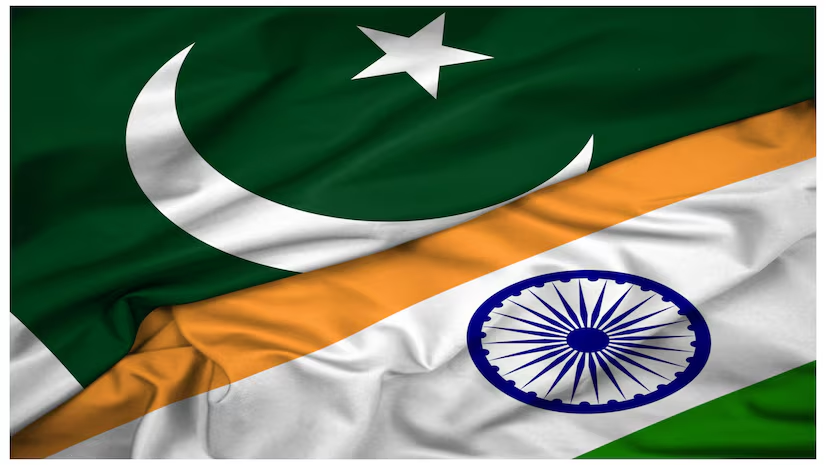
On April 23, 2025, India suspended the Indus Waters Treaty (IWT) with Pakistan following a deadly terrorist attack in Pahalgam, Jammu and Kashmir, which killed 26 tourists. This decision marks a significant shift in the longstanding water-sharing agreement between the two nations and has profound implications for Pakistan’s agriculture, economy, and regional stability.
Understanding the Indus Waters Treaty
The Indus Waters Treaty, signed in 1960 and brokered by the World Bank, allocated control over the Indus River system between India and Pakistan. Under the treaty, India received rights to the eastern rivers (Ravi, Beas, Sutlej), while Pakistan was granted rights to the western rivers (Indus, Jhelum, Chenab). The treaty has been a cornerstone of India-Pakistan relations, surviving multiple conflicts over the decades.
Reasons Behind India’s Suspension
The immediate catalyst for India’s suspension of the IWT was the Pahalgam attack, where militants killed 26 tourists. India accused Pakistan of supporting cross-border terrorism, leading to a series of retaliatory measures, including the suspension of the treaty. Indian officials stated that the treaty would remain in “abeyance” until Pakistan credibly renounces cross-border terrorism.
Implications for Pakistan
Agricultural Impact :
Pakistan’s agriculture heavily relies on the Indus River system, with the western rivers being crucial for irrigation. Any disruption in water flow could lead to reduced crop yields, food insecurity, and economic instability, especially in regions already facing poverty and financial challenges.
Economic Consequences
The suspension could exacerbate Pakistan’s existing economic woes. Agriculture contributes significantly to Pakistan’s GDP and employs a large portion of the population. Water scarcity could lead to increased unemployment, inflation, and social unrest.
Diplomatic and Legal Repercussions
Pakistan has termed India’s move as “water warfare” and may seek international arbitration. However, India’s suspension of the treaty complicates legal recourse, as the framework for dispute resolution under the IWT is now in question.
Regional and Global Reactions
The international community has expressed concern over the escalation. The United States condemned the Pahalgam attack and supported India’s right to self-defense. Analysts warn that the suspension of the IWT could set a dangerous precedent, potentially leading to further conflicts over shared water resources in other regions.
