
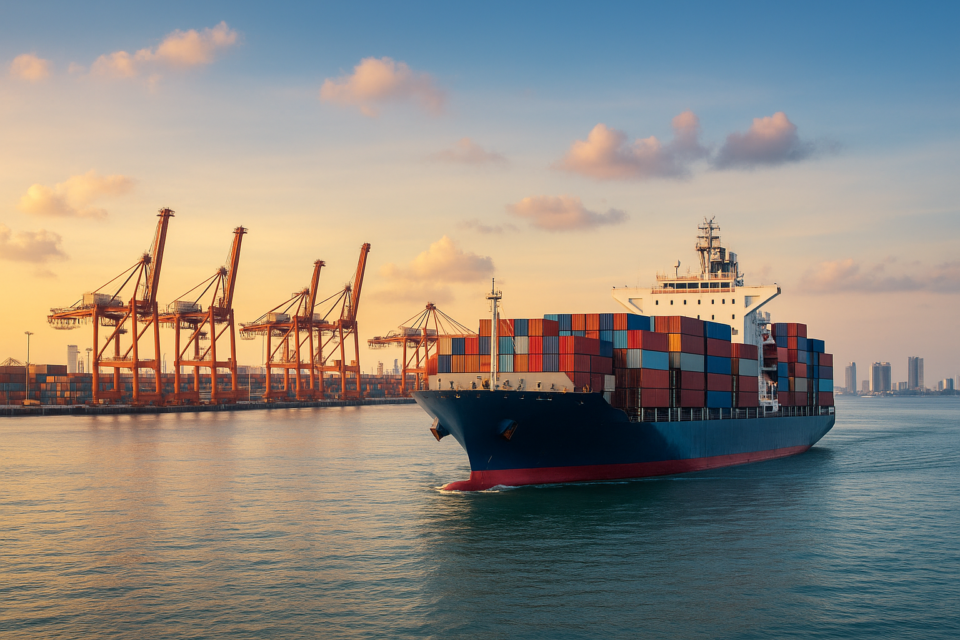
The Shipping Corporation of India (SCI), the country’s largest state-owned deep-sea shipping company, is moving ahead with a major domestic ship-purchase plan that would see it acquire 26 India-built vessels in a deal valued at roughly ₹198.2 billion (commonly reported as around $2–$2.3 billion). The announcement — which forms part of a broader government push to strengthen India’s shipbuilding base and reduce dependence on foreign tonnage — is one of the most significant procurement moves in the country’s maritime sector in recent memory.
This article unpacks the details of the transaction as reported, places the purchase in strategic context, explains likely economic and industrial impacts, and examines the opportunities and risks that follow.
The deal in brief
According to multiple reports, SCI plans to buy 26 vessels that will be built domestically under India’s shipbuilding ecosystem. The purchase price is reported at ₹198.2 billion (about $2–$2.3 billion depending on exchange rate assumptions). The fleet expansion will add roughly 1.18 million gross tonnes of internal volume to the company’s future capacity, and deliveries are expected to be phased over a number of years as the ships are completed.
The plan forms part of a concerted government effort to scale up India’s maritime industrial base — a policy direction that includes incentives for “Make in India” shipbuilding, proposals to form a maritime development fund, and coordination across state-owned enterprises to favor domestically built tonnage.
Why the timing matters
There are several reasons the timing of this purchase is meaningful:
- National industrial policy alignment. The Indian government has been explicit about wanting to expand domestic shipbuilding capacity, reduce reliance on foreign vessels, and capture more value from maritime trade — both strategically and economically. This SCI purchase is a high-visibility demonstration of that policy in action.
- Fleet modernisation and resilience. Global shipping markets remain volatile because of geopolitical tensions, supply chain shifts, and cyclicality in freight rates. Owning modern, domestically built vessels can help secure long-term capacity for India’s trade and energy logistics.
- Economic stimulus for shipyards. Indian shipyards have capacity but need continuous order flow to scale up skills, supply chains and financing structures. A large order book from SCI will provide stability of demand, supporting employment and backward linkages (steel, engineering, equipment suppliers).
What types of ships and fleet impact
Public reporting indicates these 26 vessels will cumulatively amount to about 1.18 million gross tonnes. While not every outlet lists the exact mix of vessel types in public stories, prior government and industry announcements have emphasized tankers, bulk carriers and energy-related vessels (including crude and product tankers and LPG carriers) as priority assets for domestic replacement and energy security needs. SCI’s existing fleet already comprises tankers, bulk carriers, container vessels and offshore support ships — the new vessels would significantly increase that capacity.
For SCI, adding India-built ships will alter fleet composition, renewal timelines and potentially operating economics (younger vessels are generally more fuel-efficient and cheaper to operate per tonne transported). The extent to which SCI charters these vessels to state-owned energy companies, uses them on commercial routes, or employs them under long-term charters will shape revenue outcomes and balance-sheet effects.
Strategic rationale — beyond just buying ships
This transaction isn’t solely a commercial purchase. It is a strategic lever in a wider maritime policy effort:
- Boosting “Make in India”: The government has been encouraging state buyers and public sector undertakings to preference domestically built vessels to nurture national shipbuilding capacity and reduce foreign reliance. A large SCI order sends a strong demand signal to private and government shipyards alike.
- Maritime development fund and financing: Reports and proposals circulating in the sector point to financial tools — including a proposed Maritime Development Fund — to help finance large shipbuilding programs so shipyards and buyers can manage upfront capital needs. If the SCI procurement links to such financing, it could become a model for scaling future orders.
- Energy and trade security: For strategic commodities such as crude oil, LPG and key industrial imports, reliable vessel availability under domestic control can reduce vulnerability to foreign market disruptions, charter market pressures or geopolitical frictions.
Economic and industrial benefits
If executed as reported, the purchase promises several tangible economic benefits:
- Job creation and skill development: Large ship orders typically translate into thousands of direct and indirect jobs across shipyards, steelmakers, equipment manufacturers, marine engineers and port services. The multi-year delivery schedule means sustained employment and training opportunities.
- Upstream demand for materials and services: Domestic shipbuilding requires substantial steel, piping, electrical systems, pumps, valves, cranes and high-skill naval architecture and marine engineering services — all of which stimulate local suppliers and subcontractors.
- Balance-of-payments and foreign exchange: Over time, substituting foreign-built vessels with domestically built ones reduces capital outflows. If domestically built ships also sail under the Indian flag, the economic value-capture from freight earnings and maritime services can stay in the domestic economy.
- Regional industrial clusters: Shipyard orders encourage the formation of industrial clusters around ports and coastal manufacturing hubs, improving logistics and local economic multipliers.
Financial and market implications for SCI
From SCI’s financial standpoint, a large capital expenditure program will have immediate balance-sheet and cash-flow implications:
- Capex and financing needs: A ₹198.2 billion purchase requires careful financing — a mix of internal accruals, bank loans, export credit—and potentially government support or guarantees. How SCI manages payment milestones, charter plans and financing will determine near-term solvency and shareholder returns.
- Revenue outlook: New vessels, especially if employed under long-term charters with public sector energy companies, can provide stable, predictable cash flows. Conversely, if SCI exposes a large part of the fleet to spot markets, revenue will be more cyclical but could capture upside if freight markets remain strong.
- Share-market reaction: Historically, large strategic orders and fleet expansion announcements can move investor sentiment. Several brokers and market outlets already flagged SCI shares as “in focus” after the reports. How markets view the deal will hinge on clarity about financing, delivery schedules and commercial employment of the ships.
Impact on Indian shipyards — opportunity and challenge
While a big order is welcome, shipyards face real implementation challenges:
- Capacity and lead times: Indian yards have grown, but Gulf and East Asian yards (South Korea, China, Japan) remain global leaders in scale and delivery speed. Delivering 26 modern large ships will test Indian yards’ capacity, workforce scale and project management.
- Supply chain readiness: Sourcing specialized marine equipment and high-spec steel in the volumes required can strain domestic suppliers; some items may still need to be imported, affecting costs and delivery timelines.
- Quality and certification: International charterers and classification societies demand strict standards. Indian shipyards must adhere to these to ensure wide market acceptance of the vessels.
- Price competitiveness: Historically, Indian shipyards have sometimes been costlier or slower than East Asian competitors on certain vessel classes. Large domestic orders can help reduce unit costs through scale and repeated builds, but execution risks remain.
Environmental and regulatory dimensions
Newer vessels typically comply with tighter emission standards and are more fuel efficient than aging tonnage. If the new ships meet modern IMO regulations (e.g., energy efficiency design index improvements, low-sulphur fuel compatibility, potential for future alternative fuels), they could help SCI reduce its carbon intensity and operating costs. That alignment matters as charterers increasingly weigh environmental performance when selecting shipping partners.
Additionally, India’s recent maritime policy and legislative updates (including the Merchant Shipping Bill and related regulatory measures) aim to modernize shipping governance — which may create clearer pathways for flagging, inspection, and environmental compliance for new domestic tonnage.
Risks and uncertainties
No large procurement is without downside. Key risks include:
- Delivery delays and cost overruns: Large shipbuilding programs commonly face delays, especially where yards are scaling production rapidly. Time overruns translate into deferred revenue and higher financing costs.
- Financing strain: If the program is heavily debt-funded without secured long-term charters, SCI could face stress during cyclical downturns in freight markets.
- Market mismatch: If SCI ends up with vessel types that are oversupplied in international markets or mismatched to demand, utilization could suffer and returns could erode.
- Geopolitical/market shocks: Global shipping demand is sensitive to macroeconomic conditions; a slowdown in trade growth or an unexpected regional shock could affect freight rates and employment prospects for the new vessels.
What to watch next
The headlines are a start — but several practical steps and disclosures will determine the outcome:
- Official SCI confirmation and tender details. Look for SCI press releases or official government notifications that specify vessel types, prices, payment schedules, and the selected/eligible shipyards. That clarity will let analysts model balance-sheet impacts.
- Financing plan transparency. Will the purchase be financed via internal accruals, bank loans, export credit, or government support? Any guarantee or funding from a Maritime Development Fund would materially change SCI’s leverage metrics.
- Delivery timetable and yard selection. Knowing which yards will build the ships and the delivery cadence will indicate supply-chain preparedness and potential bottlenecks.
- Employment strategy for vessels. Will SCI charter the ships on long-term contracts (reducing risk) or operate them in the spot market (raising revenue volatility)? This will be a core input for investors and industry watchers.
Broader implications: a step toward maritime self-reliance?
India’s trade and energy profile means shipping is strategic — not just commercial. A government-backed, state-owned company placing a large domestic order signals a push toward maritime self-reliance (a “shipping industrial policy”). If executed well, the move could:
- Seed longer-term demand that encourages private orders and foreign investment into Indian shipbuilding;
- Lower India’s dependence on foreign tonnage for critical trade and energy logistics;
- Provoke regional competitive dynamics (neighbouring countries and private shipowners may respond with their own strategies); and
- Offer a test case for financing models (maritime development funds, long-term charters) that could be scaled to future shipbuilding drives.
