United Nations: Pakistan has called for urgent progress in the Gaza peace process, warning that delays could worsen the humanitarian crisis and undermine diplomatic momentum.
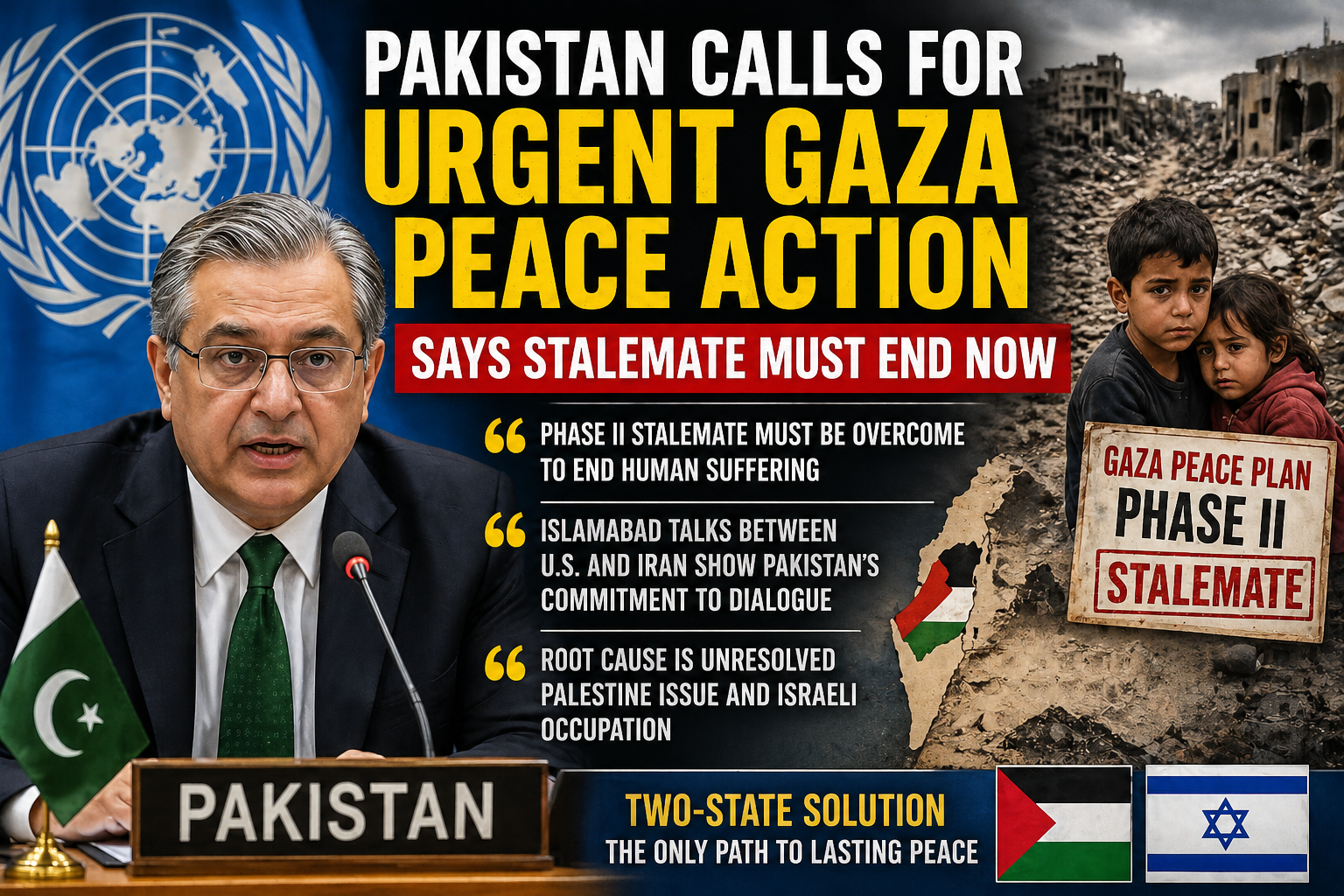
Speaking at the UN, Asim Iftikhar Ahmad, Ambassador of Pakistan, emphasized that the current stalemate—particularly regarding Phase II of the Gaza Peace Plan—must be resolved without further delay.
“Any delay risks eroding hard-won momentum and deepening human suffering,” he said, urging the international community to act decisively.
Pakistan Pushes for Diplomatic Engagement
Ahmad stated that Pakistan remains actively involved in promoting diplomatic solutions and peaceful engagement to resolve the crisis.
He highlighted recent talks hosted in Islamabad between the United States and Iran as an example of Pakistan’s commitment to facilitating dialogue in the region.
“Pakistan remains actively engaged in advancing such diplomatic pathways and advocating for a peaceful resolution of this crisis,” he added.
Focus on Palestine as Root Cause
The Pakistani envoy reiterated that the core issue behind instability in the Middle East remains unresolved.
According to Ahmad, the situation stems from the continued occupation of Arab lands and the unresolved question of Palestine.
He stressed that a two-State solution remains the only viable path toward achieving long-term peace, dismissing other explanations for regional tensions.
“Not expansionist ambitions or illegal wars, but the end of occupation and realization of a Palestinian state is essential for lasting peace,” he stated.
Pakistan, he affirmed, will continue to support this objective on international platforms.
Editorial: A Case of Diplomatic Irony?
While Pakistan’s call for peace and stability in the Middle East reflects a familiar diplomatic stance, critics have pointed out a striking contradiction closer to home.
For a country that frequently finds itself in tense relations with multiple neighbors—including India, Afghanistan, and Iran—the role of a global peace advocate raises eyebrows.
Observers often note that managing peaceful borders is typically considered the first test of diplomatic credibility. Yet, recurring border tensions, cross-border incidents, and strained bilateral ties have remained persistent challenges for Pakistan.
This has led to a degree of skepticism in international circles. The irony, critics argue, lies in lecturing the world on conflict resolution at forums like the United Nations while struggling to establish sustained peace in its own neighborhood.
In diplomatic language, such contradictions are rarely acknowledged outright—but they are certainly not overlooked.
Growing Debate at the UN
Pakistan’s remarks come amid increasing debate within the UN over how to revive stalled peace efforts in Gaza. While countries broadly agree on the need for a resolution, differences remain over approach, priorities, and accountability.
As global powers continue to push competing narratives, the path to a lasting solution appears increasingly complex.