
Introduction
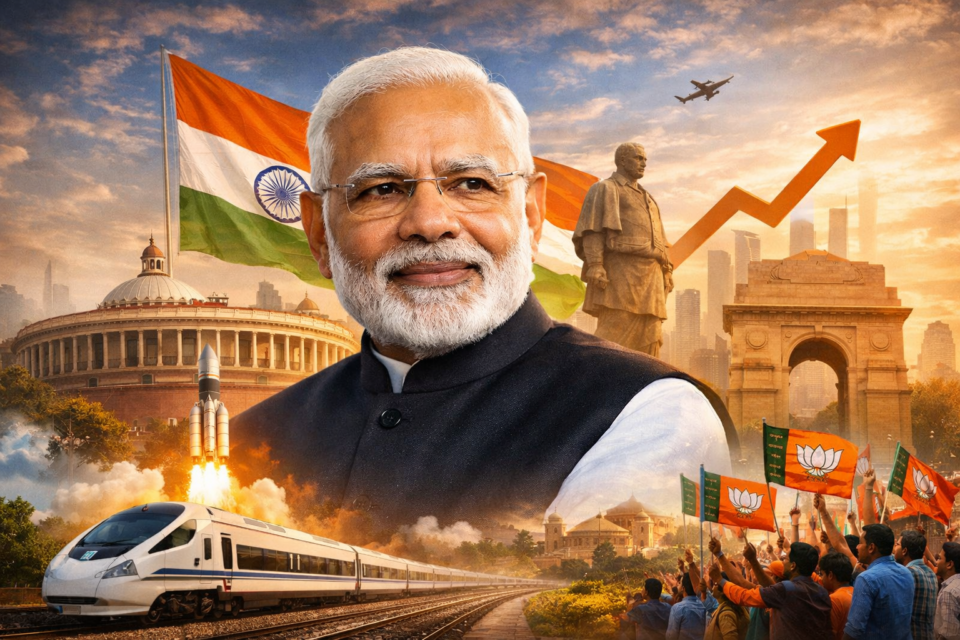
Narendra Modi is one of the most influential political leaders in modern India. Serving as the 14th Prime Minister of India since 2014, Modi has reshaped India’s political landscape with his strong leadership, economic reforms, and global diplomacy. His journey from humble beginnings to the highest political office in the country is widely discussed and debated.
Early Life and Background
Narendra Damodardas Modi was born on September 17, 1950, in Vadnagar, Gujarat, into a modest family. His father ran a tea stall, and young Modi often helped him—an experience that later became a defining part of his public narrative.
From an early age, Modi showed interest in spirituality, discipline, and national service. He was associated with the Rashtriya Swayamsevak Sangh (RSS), which played a key role in shaping his ideological foundation and leadership skills.
Entry into Politics
Modi’s formal political journey began when he joined the Bharatiya Janata Party (BJP). Known for his organizational skills and strategic thinking, he quickly rose through the ranks.
His major political breakthrough came in 2001 when he became the Chief Minister of Gujarat, a position he held for over a decade (2001–2014). During this period, Gujarat witnessed rapid industrial growth and infrastructural development, though his tenure also faced criticism, particularly regarding the 2002 Gujarat riots.
Prime Minister of India
In 2014, Narendra Modi led the BJP to a historic victory in the general elections, becoming the Prime Minister of India. He was re-elected in 2019 with an even larger mandate, reflecting strong public support.
As Prime Minister, Modi has launched several flagship initiatives:
- Make in India – Boosting manufacturing and investment
- Digital India – Promoting digital infrastructure and services
- Swachh Bharat Abhiyan – Cleanliness and sanitation campaign
- Startup India – Encouraging entrepreneurship
His government has also focused on financial inclusion, infrastructure development, and welfare schemes for the underprivileged.
Economic and Policy Reforms
Modi’s tenure has been marked by bold economic decisions, including:
- Implementation of the Goods and Services Tax (GST)
- Demonetization in 2016 aimed at curbing black money
- Push for self-reliance through the “Atmanirbhar Bharat” initiative
While these reforms have had mixed reactions, they have significantly influenced India’s economic framework.
Foreign Policy and Global Image
Narendra Modi has actively strengthened India’s global presence. He has built strong relationships with world leaders and positioned India as a key player in international politics.
His diplomatic efforts include participation in global forums like the United Nations and strengthening ties with countries such as the United States, Japan, and Australia.
Leadership Style and Public Image
Modi is known for his charismatic communication style, strong decision-making, and direct connection with citizens through platforms like social media and radio programs such as Mann Ki Baat.
His leadership is often described as decisive and visionary, though critics argue that some policies have been controversial.
Awards and Recognition
Narendra Modi has received numerous international awards and honors for his leadership and global influence, further cementing his position as a prominent global statesman.
Conclusion
Narendra Modi’s journey from a small-town boy to the Prime Minister of the world’s largest democracy is remarkable. His leadership continues to shape India’s political, economic, and global trajectory. Whether praised or criticized, Modi remains a central figure in contemporary Indian politics.
