
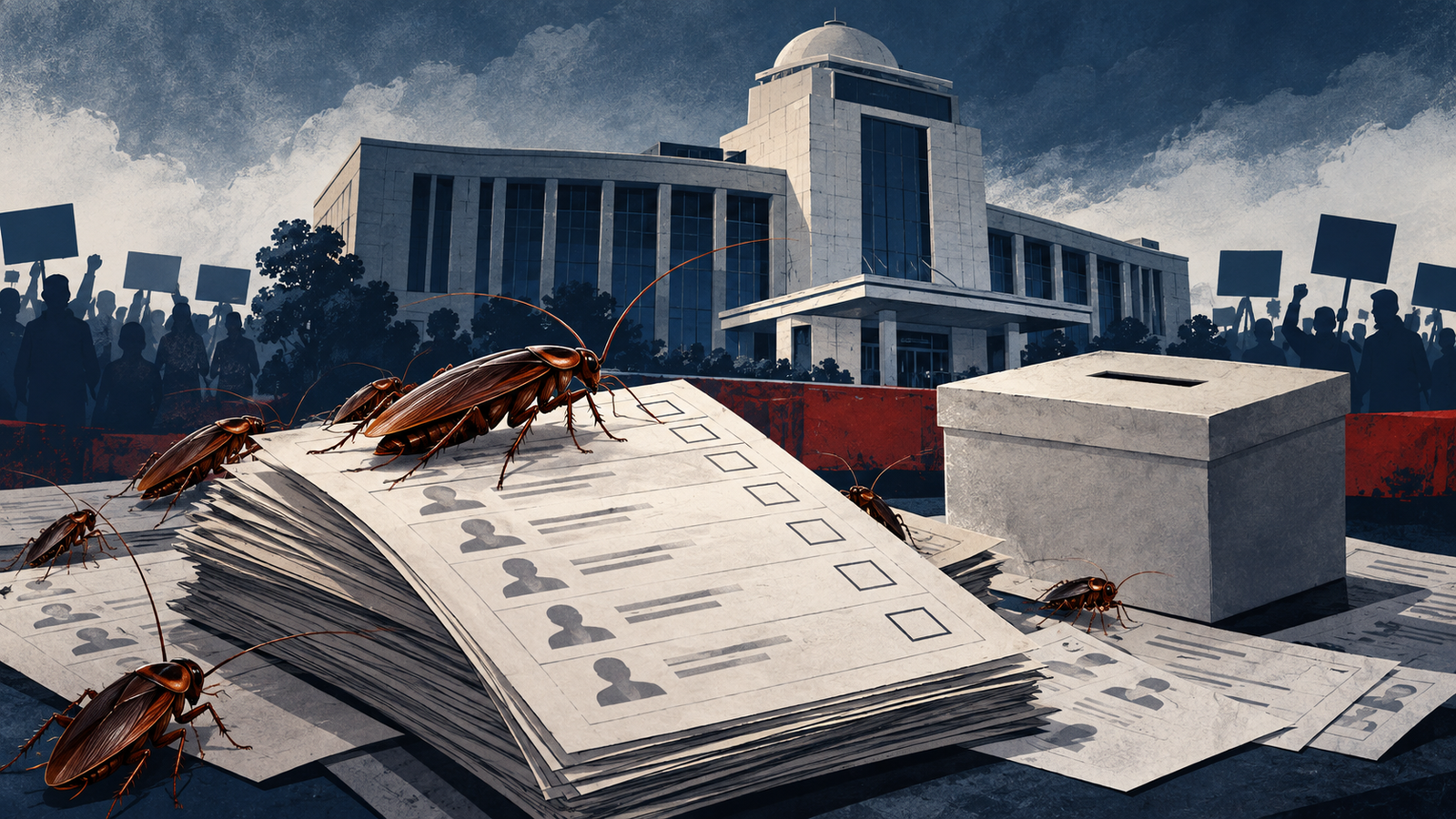
NEW DELHI: The Cockroach Janta Party (CJP) has demanded the resignation of Chief Election Commissioner Gyanesh Kumar and warned of nationwide protests following reports that two Election Commissioners had raised repeated objections during the Special Intensive Revision (SIR) of electoral rolls. The Election Commission has rejected the suggestion that internal differences show improper decision-making, but has not publicly provided a point-by-point account of how the reported concerns were addressed.
CJP founder Abhijeet Dipke gave Kumar a 48-hour ultimatum at a September 24 press conference. A day later, he said the group would begin protests in Mumbai on October 2, Gandhi Jayanti, if Kumar did not resign, before taking the campaign to other cities. The proposed protest is a plan announced by CJP; it has not yet taken place.
What triggered the latest Election Commission controversy?
The immediate trigger was an Indian Express investigation reporting that Election Commissioners Sukhbir Singh Sandhu and Vivek Joshi had raised questions or objections on at least 14 occasions over 10 months. According to the newspaper’s account, many of the notes concerned decisions and procedures related to the SIR voter-roll exercise. Those reported internal objections do not, by themselves, establish that electoral rolls were manipulated or that Kumar acted unlawfully.
CJP has called for an independent investigation into SIR decisions. It has also demanded that disputed exclusions be halted, relevant records be preserved and decisions taken during the revision be examined. Opposition parties have separately alleged that voter-list changes could benefit the ruling Bharatiya Janata Party (BJP), an allegation the BJP denies.
What has the Election Commission said?
The Election Commission has not been wholly silent. In a September 23 response to the newspaper’s investigation, it described different views among commissioners as a normal part of institutional deliberation and maintained that its decisions were lawful. Reuters reported that the commission did not immediately respond to its separate request for comment on CJP’s ultimatum.
The distinction matters: the commission has given a general defence of its decision-making, while the detailed questions raised by the reported internal notes remain the subject of public scrutiny. CJP’s demand for resignation is a political demand, not a finding of misconduct by a court or an independent inquiry.
Why the SIR dispute matters
The SIR is an exercise to review and update electoral rolls. Its stated purpose is to improve the accuracy of voter lists, including by identifying duplicate, deceased or otherwise ineligible entries. At the same time, an eligible voter wrongly removed from a roll could face difficulty exercising the franchise. The central question is whether the safeguards, records and appeal process allow mistakes to be found and corrected promptly.